

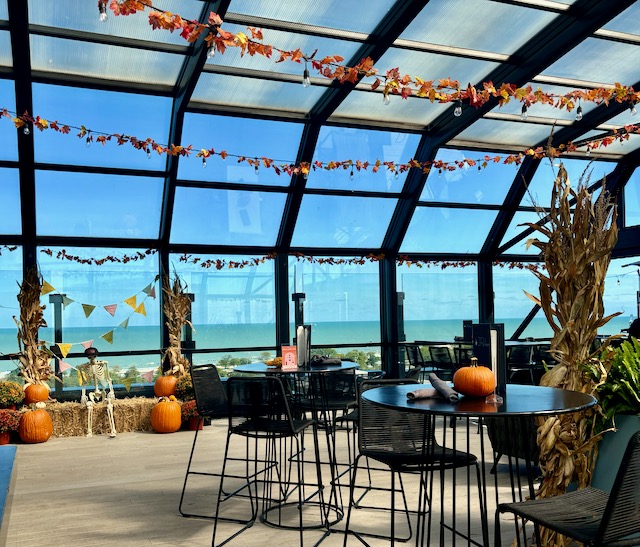
I had a delightful wine tasting and lunch last week with Nino Deicas, Brand Ambassador and member of the very family run winery, Familia Deicas, located in Juanicó, Canelones, Uruguay, along with Myra Sorensen of Cork Alliance, his importer. When deciding where to meet, considering that Uruguay has 400 miles of coastline along the Atlantic Ocean, I thought that the views of Lake Michigan (our midwestern ocean) would be a great place to travel by the glass, sipping Uruguayan wines. We tasted through Deicas’ Coastal whites and Atlantico Sur wines of albarino and tannat, and their Extreme vineyard Tannat. Little did I know, I would also be tasting their award winning Uruguayan icon wine, Preludio red, a Bordeaux blend including 50% tannat (the signature grape of Uruguay).
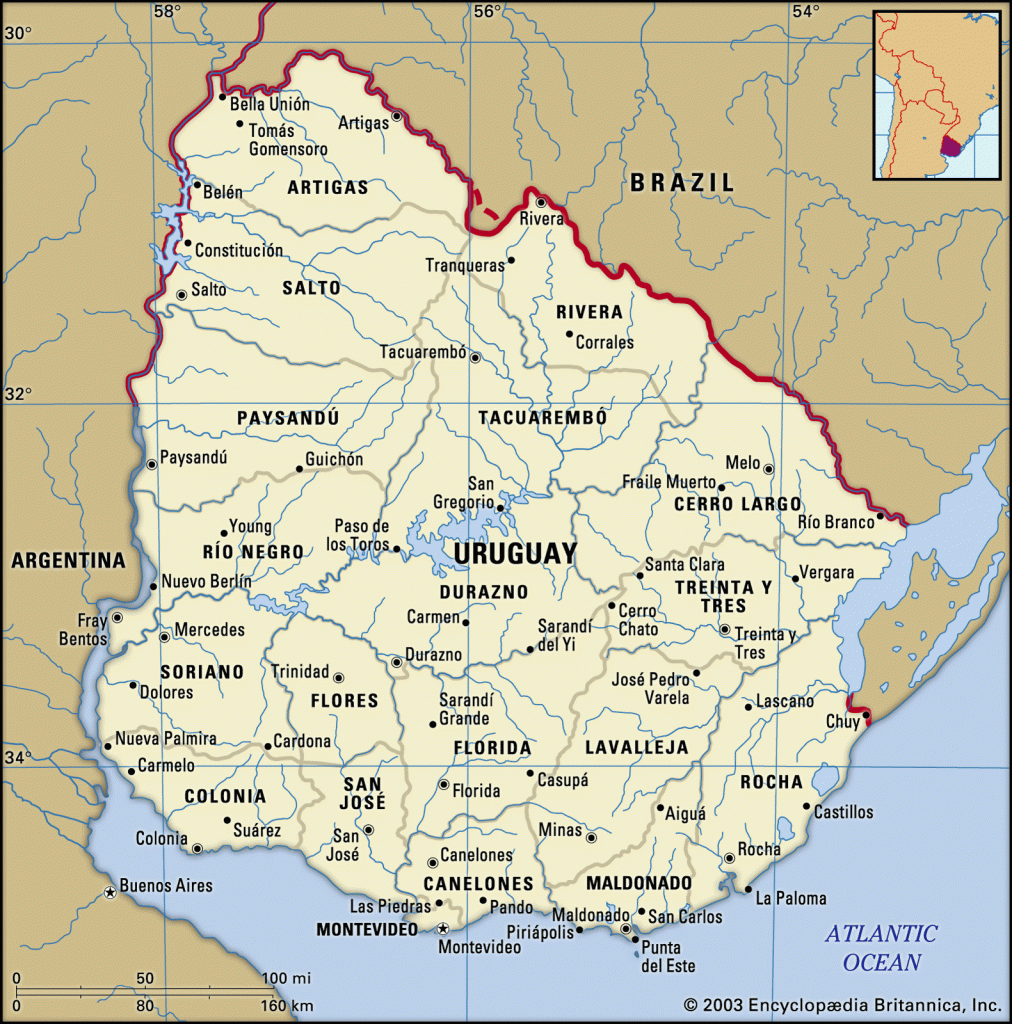
The country of Uruguay is roughly the size of the US state of Washington. It seems that almost all the vineyards are relatively close to the ocean and have a maritime influence. Brazil is to the north and east, the Atlantic Ocean southeast, the Rio de la Plata estuary is to the south and the Uruguay river lines the western boundary with Argentina. The country has a maritime climate along the coasts with rainfall year round and the rain lessens as you move northwest. The capital of Uruguay lies on the 34 degree latitude which falls within the latitude zone for growing wine grapes. What maritime climates, bordering oceans come to mind? Bordeaux of France and Galicia of Spain. Hence, you will find the french grapes of Bordeaux, cabernet sauvignon, merlot, cabernet franc, petit verdot are at home here in Uruguay as well as Tannat of southwest France, which I will go into further detail below. Albarino/Alvarinho grape of Spain and Portugal, grown in vineyards along the estuaries in Rias Baixas, are a perfect Uruguayan climate match and grow in vineyards near the coast.
Probably the most important takeaway that I got from Nino, is that the winery is a family business and it is all about family. Nino’s grandfather, Juan Carlos Deicas who was born in northern Italy, migrated to Uruguay, and bought the winery in 1979. Since then, his son, Fernando Deicas, is now President of the winery. Fernando’s son, Santiago is the winemaker, his daughter Mercedes is the chef of their restaurant and Nino is the Brand Manager. When researching a bit more for this piece, I found that the Deicas wines are mentioned in the recent edition of Jancis Robinson’s The Oxford Companion to Wine, 5th, in the entry on Uruguayan wine, Deicas is mentioned as a winery to know, and that they are known for their extreme vineyards. Nino did go on about how his father was focused on finding different terroir, soils to grow grapes on.
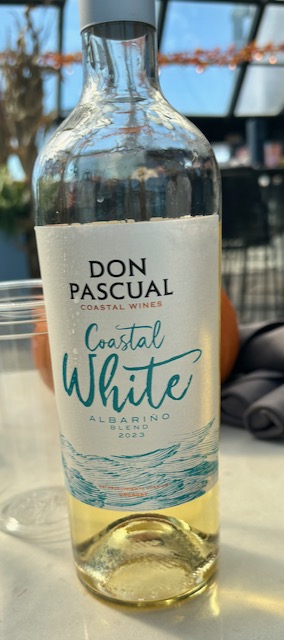
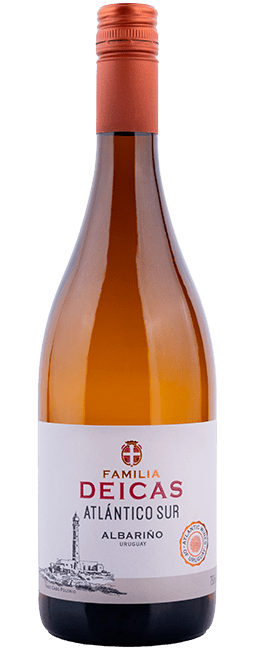
Their Don Pascual line, including this white blend of Albarino, Chardonnay and Pinot Grigio made from grapes grown in vineyards near the famous tourist destination of Punta del Este in the Maldonado department of southeastern Uruguay, is a line of easy, summer, sippers. Their Atlántico Sur line is a blend of grapes from different vineyard sites no further than 30k from the ocean, this 100% Albarino’s grapes is sourced from 2 vineyards, Garzon that has more granitic soil and Juanico that has calcareous clay. The wine was crisp, nice fruit concentration of grilled pineapple, yellow pear, apricots with a slightly salty, dry finish.
I couldn’t sip a wine from Uruguay without tasting some tannat wines which has become the signature grape of Uruguay, the way that Malbec is synonymous with Argentina and Carmenere with Chile. Tannat is a native grape to the Haut Pyrenees in southwestern France and is thought to have originated in the town of Madiran. The wines have a reputation for being deep, dark, inky and very tannic. During the late 19th century, Basque immigrants are attributed to bringing the Tannat grape with them and planting vineyards in Uruguay. The grape adapted well to the semi-maritime climate and plantings increased. By 2008, the Tannat grape was the most widely planted grape in the country. However, the grape has continued to have a reputation of being extremely tannic, until recently. Winemaking styles have changed and Nino explained that they handle the grape very carefully, they grow it in the vineyard for phenolic ripeness of the skins but aren’t as concerned about the stems. Rather than long maceration times in the cellar, they only macerate the grape for 3-4 days, which adds color and flavor without pulling out all the tannin and getting seed and stem tannins. So across the board, tasting their different lines of wines, the tannins were present and added backbone to the wine without overpowering the wine. These were modern style tannat wines not the 1990s style big, robust, tannic wines.
Nino poured their Don Pascual Red Blend (Cabernet Sauvignon, Cabernet Franc, Marselan, Tannat and Merlot), mostly stainless steel fermented with 15% in wood. This was a juicy, easy, sipper with soft tannins. The Don Pascual Coastal Tannat 2022 was 100% Tannat sourced from vineyards in San José, Canelones and Maldonado. All grapes picked by hand, and sorted, and a brief maceration. The wine was a mix of red and black fruit, blackberries, cassis, spice, medium acid and mouthfeel. Finally, the Atlantico Sur Tannat, 2021, which is a blend of vineyards of different soil types and handled in a similar style, short maceration time, picking the grapes at their maximum skin ripeness and Paul Hobbs was a consultant on this wine as he has been on many of Deicas’ wines since 2013. Hobbs was brought in to guide them on a path to a modern style of Tannat rather than the traditional more coarse style found elsewhere. The Atlantico wine is a bit more polished than the Don Pascual and the complexity of fruit broader and the tannins present, firm, but not coarse. Which leads into the next wine out of Myra’s bag, the Extreme Vineyard red blend.
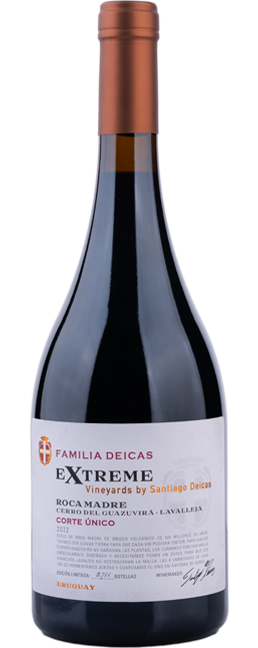
Nino explained that his father is obsessed with discovering new soil types to grow grapes on. How did they choose the place, the Cerro dec Guazuvirá, Chacra de las Sierras in Lavalleja, northeast of their winery in Juanico?
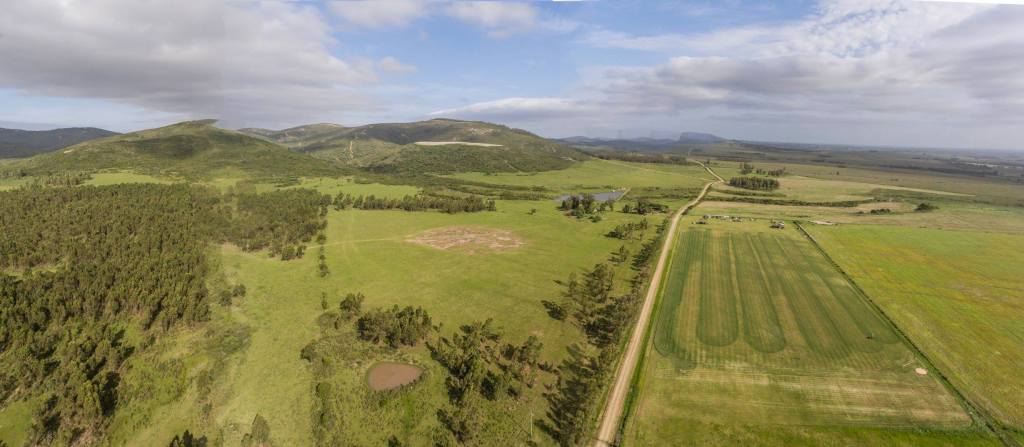
“This vineyard was planted in 2014 next to Charcas de las Sierras, 27 km from the coast, on bedrock with granite of volcanic origin so unaltered that it had to be blasted. In order for the vineyard to be able to grow, soil had to be brought in. The plants were covered with a specially designed mesh to avoid damage from the Guazuvira deer. An electric fence was built so the wild boars wouldn’t destroy the mesh. The effort was worth it.
The vineyard is on the Guazuvirá hill, in Lavalleja, just 27 km from the sea. It is an extremely stony terrain of mostly unaltered granite of volcanic origin from 520 million years ago after a cycle of intense volcanic activity at the end of the Cambrian Period, on the large geological fault line, “Cizalla Sarandí del Yí”. As the soil retains very little water, constant irrigation is essential.
Due to the very wild and natural environment, there are many species of animals that are not typically found in traditional wine-growing areas. This is the case for the small Guazuvira deer, which we discovered enjoys eating vine leaves, forcing us to place a protective mesh throughout the vineyard. This method also limits access for fruit-eating birds, who often feast on the grapes.” (Quote from their website)
The wine is a co-ferment of merlot 50%, tannat 40%, petit verdot 8% and viognier 2%. The wine is fermented in stainless steel and then 70% aged in 500L clay amphora and 30% burgundy barrels. This was a complex wine, deep color, a variety of red and black fruits, spice, wood notes, and a long finish. It had a much broader mouthfeel than the previous wines without being overly weighty. Finally, to their icon Preludio wine.
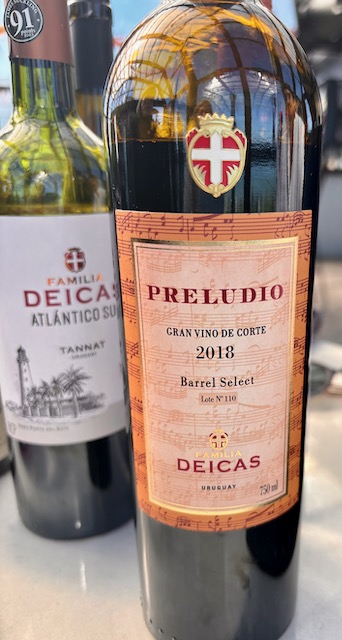
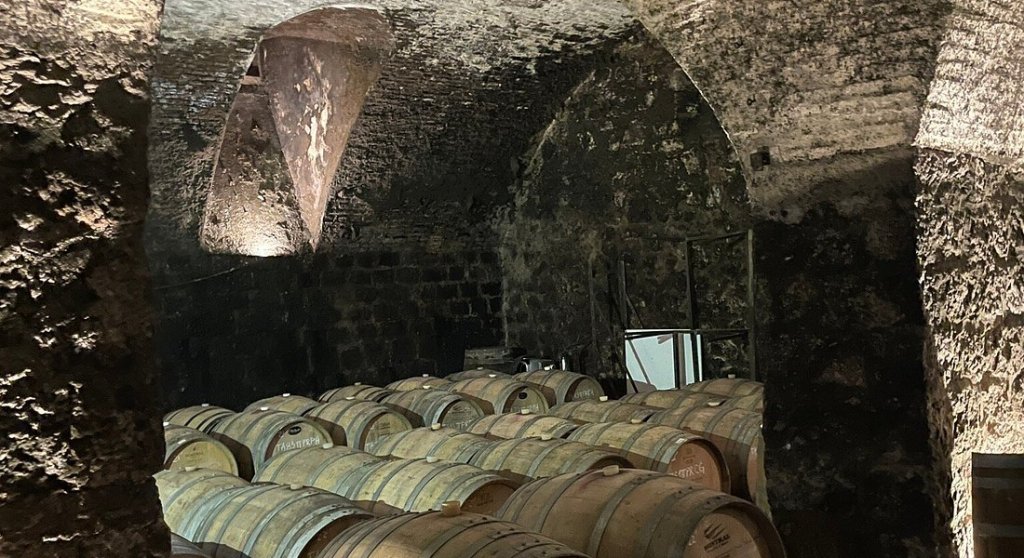
Their Preludio wine was first produced in 1992. They were inspired by the greatest Bordeaux blend wines and the historical underground cellar that was part of the winery. The cellar had been used by Jesuits in the 18th century. Nino kept talking about the fungus in the cellar and it reminded me of my visit to Domaine Lafarge in Volnay, Burgundy and it was so full of fungus, that I thought I was inhaling it. But these type of cellars can be great for wine and have an influence on the flavors of the final product. Through their barrel selection process over the course of 2 to 3 years, they whittle down 600 barrels to 200 for the production of the wine.
“The most concentrated bunches are selected from vineyard plots with a limited production of 40 hl per hectare. Manual harvest with an initial rigorous cluster selection in the vineyard and a second grape-by-grape selection at the winery after de-stemming. Prolonged maceration of over three weeks allows for the concentration of the musts, aromas and flavors of fruits, spices and flowers, which are then developed during aging.
Aged in barrels in underground cellars built from stone in 1830, where the naturally constant temperature and humidity ensure optimal conditions for the best evolution of the wine. Every 6 months, the barrels which can best continue the ever demanding wine aging process are selected. Therefore, although each year begins with 600 barrels, the 24 to 30 month aging process finishes with less than 200 barrels. The art of assemblage is then entrusted to the tasting committee, where the final blends are determined.”
This was a wine that had all the notes that make for a slow sipping, long dinner wine, leather, tobacco, red and black fruits, spices, mineral notes, very long finish, a very polished mouthfeel. This was a wine, where were I at a meal, that I would want for my entree and into dessert.
Preludio was a great wine to end on, for my travels through the glass to Uruguay with Nino and Myra, learning about the country, the place, the vineyards, the wines and the Deicas family!

 Traveling By The Glass - Posts by Jeannie Boutelle